
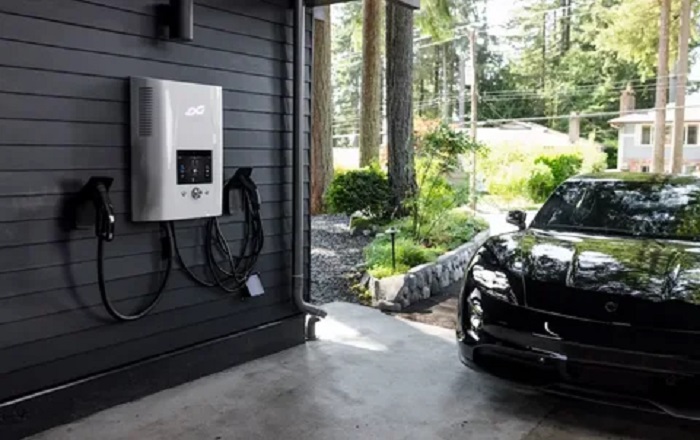
A solar-ready EV charger should do more than accept power from a roof. The real job is timing. It has to know when solar production is high, when the house needs power, when the battery should be protected, and when the car can wait.
That makes the feature list more practical than flashy. A charger that looks impressive on the wall may still waste solar, overload a panel, or fight with a home battery if it cannot coordinate with the rest of the system.
Surplus Solar Charging
The most useful feature is the ability to follow surplus solar. In a home energy system, surplus solar is the power left over after household loads and battery priorities are covered. A good charger can increase or decrease charging power as that surplus changes.
This matters because solar output moves all day. A cloud passes. The oven turns on. The heat pump starts. Without flexible charging, the EV may pull from the grid even when the homeowner thought it was charging on sunshine.
NREL’s PVWatts calculator is widely used to estimate solar production by location, system size, and seasonal conditions. That kind of estimate is helpful for design, but real-time charger behavior is what makes the system work day to day.
Load Control and Panel Awareness
A solar-ready charger should not act like the only device in the house. Load control helps avoid overloading the electrical panel by reducing charging power when the building is using too much electricity. For homes with older panels, this can be the difference between a manageable installation and an expensive upgrade.
ENERGY STAR says Level 2 chargers can add about 10 to 30 miles of range per hour, depending on the vehicle and charger. That is useful speed, but it also means the charger is a significant load. Smart controls are not a luxury when the charger is sharing a panel with HVAC, appliances, solar, and storage.
A buyer comparing ESYsunhome EV charger products should look beyond rated power and check how the charger communicates with the broader ESS and monitoring platform.
Battery Reserve Protection
One common mistake is letting the EV drain the home battery at the wrong time. If the goal is backup protection, the system should preserve a reserve instead of treating the stationary battery like a fuel pump for the car.
Reserve settings are especially important during storm season or in regions with weak grid reliability. The charger may be allowed to use surplus solar, but not the last few kilowatt-hours needed for refrigeration, lights, internet, or medical equipment.
Clear App Visibility
A home energy app should show more than whether the car is charging. It should make energy flow understandable: solar production, battery state of charge, home load, EV charging power, and grid import or export. Remote control also matters because charging decisions often change after the car is plugged in.
Safety certifications, outdoor rating, connector compatibility, and firmware support should sit beside these energy-management features. The best solar-ready EV charger is not the one with the longest spec sheet. It is the one that helps the home use more of its own solar without sacrificing comfort, safety, or backup readiness.