
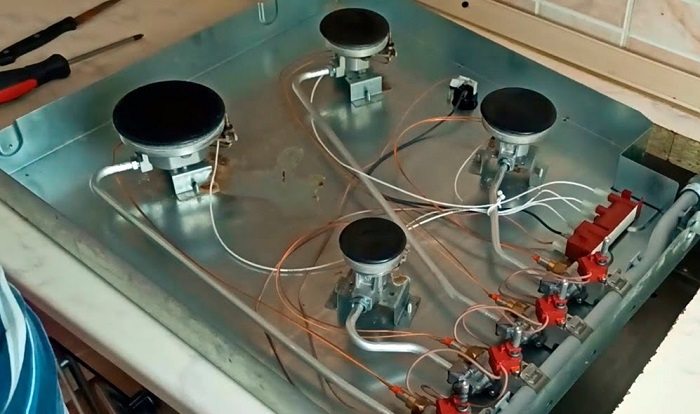
The ignition switches in the cooktop are responsible for sending a signal for sparking and starting the burner, so wear or damage directly impacts ease and safety. A malfunction may result in a lack of spark, an unintentional clicking sound, a sticking knob, erratic operation, or only actuation in one position.
This article discusses typical causes of switch failure (moisture and grease ingress, burnt contacts, mechanical wear, and damaged wiring), signs that distinguish the problem from a faulty ignition module, and when a professional appliance repair cooktop technician is needed for diagnosis and replacement.
Signs of a broken spark button
Typical symptoms include constant or erratic clicking, a sticking button, and a complete lack of spark. These symptoms can appear individually or in combination, especially after exposure to moisture, grease, or wear on the contact block.
Clicking, sticking, and no spark
Continuous clicking when the burner is off or without pressing the button is one of the most noticeable signs. Sometimes the clicking occurs in bursts, intensifies when touching the panel, or appears after cleaning: this could indicate burnt contacts, a breakdown in insulation, or moisture inside the switch, causing the ignition circuit to close spontaneously.
A sticking button is noticeable tactilely: the button is hard to press, does not return to its original position, or returns with a delay. As a result, the ignition may continue to click longer than normal, and the spark may be erratic. Often, the cause is contamination of the mechanism (grease, carbon deposits), deformation of plastic components, or wear of the spring, causing the contact to remain closed.
A lack of spark when pressed indicates that the ignition circuit is not triggering at all or is triggering only intermittently. In this case, the button may feel “empty” (pressing without the usual resistance) or, conversely, press normally but without effect. This is often due to oxidation/burning of the contacts inside the switch or a broken wire, preventing the impulse from being transmitted to the ignition module.
- Clicking sounds, but no spark, indicate possible wear of the button contacts or a faulty connection.
- Constant clicking sounds indicate likely sticking/moisture, and the button remains electrically “pressed.”
- An intermittent spark appears, typical of dirty or burnt contact pads.