
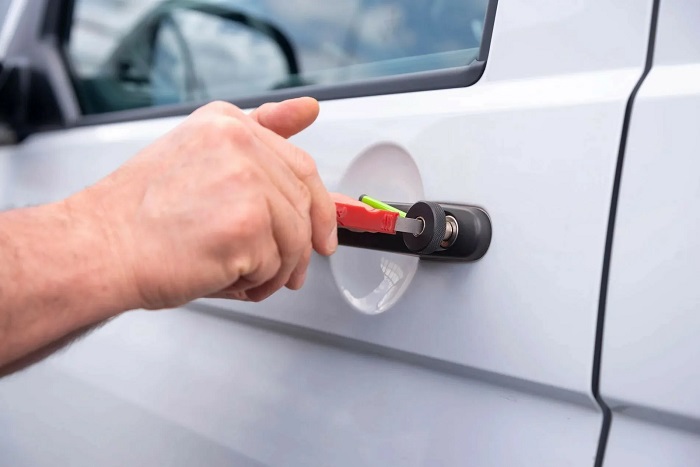
Car owners often encounter situations where access to the interior or trunk is blocked: lost keys, a dead battery, a faulty lock, or a malfunctioning alarm. This article discusses the main options and methods for opening a car, their features, the risks of damage, and cases when it’s best to immediately contact a professional.
We’ll also discuss which methods are suitable for different types of locks and access systems, how to avoid worsening the situation, and what to look for when choosing a locksmith. More about car opening on https://carlocksmithcambridge.ca.
Selecting Mechanical Methods for Opening Door Locks Without a Key
Mechanical methods for opening car locks involve physically forcing the door components, cylinders, or internal rods to regain access to the interior without the original key. It’s important to understand that most modern vehicles have multi-layered security, and any careless intervention can damage the seals, paintwork, glass, lock, or wiring.
Considering such methods is only appropriate within the framework of legal vehicle ownership (for example, if the keys are lost) and with a priority on safe, non-destructive solutions. In practice, methods that minimize the risk of door frame deformation and do not require disassembling the trim are most often chosen, as well as those that allow operation to be stopped at the first sign of resistance.
Criteria for Selecting a Mechanical Approach
Selecting a method usually begins with an assessment of the door design and the type of locking mechanism. These include the presence of a double lock (deadlock), the location of the rods and latches, the frame shape, the type of glass unit, and the accessibility of the locking button or handle. The more accurate the preliminary diagnosis, the higher the chance of avoiding damage and re-adjusting the lock.
- Lock and drive type: cylinder, central locking, mechanical rod, combined solutions.
- Accessible impact points: gap at the top of the door, area near the seal, access to the interior handle.
- Risk of collateral damage: bent frame, kinked seal, scratches on the pillar, chips on the door edge.
- Vehicle condition: door warpage, worn cylinder, jammed mechanism, consequences of an accident or corrosion.
If working through the top edge of the door, it is critical to control the force applied: excessively loosening the frame often leads to drafts, noise at speed, and glass misalignment. When choosing a method for affecting the cylinder, its wear and the presence of protective elements are assessed, as aggressive attempts to turn the mechanism often result in the breaking of internal components.
Sequence of Selection and Limitations of Mechanical Methods
The selection logic usually proceeds from the least invasive to the most risky. First, check the capabilities of standard access (spare key, service access), then consider methods that do not affect the cylinder and do not require disassembly. If the goal is to preserve the door’s factory geometry, preference is given to solutions that avoid prolonged stress on the frame and minimize contact with painted surfaces.
- Assess the locking scenario: all doors are closed, is the enhanced locking mode activated, is there mechanical access through the cylinder?
- Choose the least traumatic application point: areas where the seal is easier to return to its original position and there is less risk of scratching.
- Monitor the force and duration of action: stop attempts if there are signs of deformation or abnormal resistance.
- Check functionality after opening: correct closing, no distortion, normal operation of the handles and lock.
It should be noted that in some vehicles, mechanical action on door elements may not be effective due to the structural locking and rod protection, and attempts to “force” the mechanism further increase the risk of failure. In situations where there is a risk of damage or the locking pattern is unclear, the safest solution is to contact a qualified technician who can open the vehicle with minimal intervention and then check the adjustments.